
What Are Panel Systems?
Panel systems are ready-made or semi-ready wall finishing materials that are installed over an existing wall or framework. They are used to create decorative, functional, or protective wall surfaces.
These panels can be made from different materials such as:
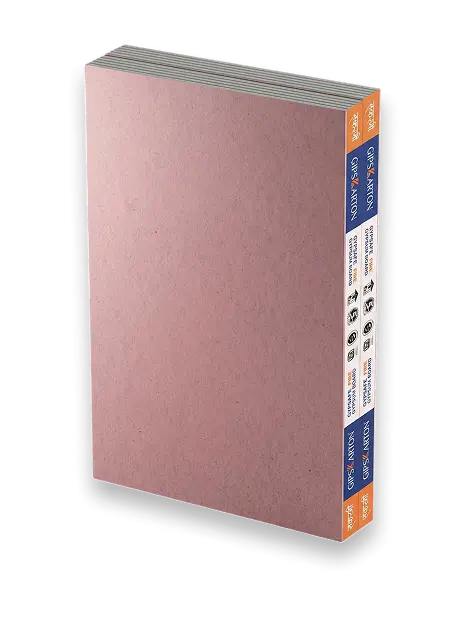
Gypsum boards
Cement boards
PVC panels
WPC panels
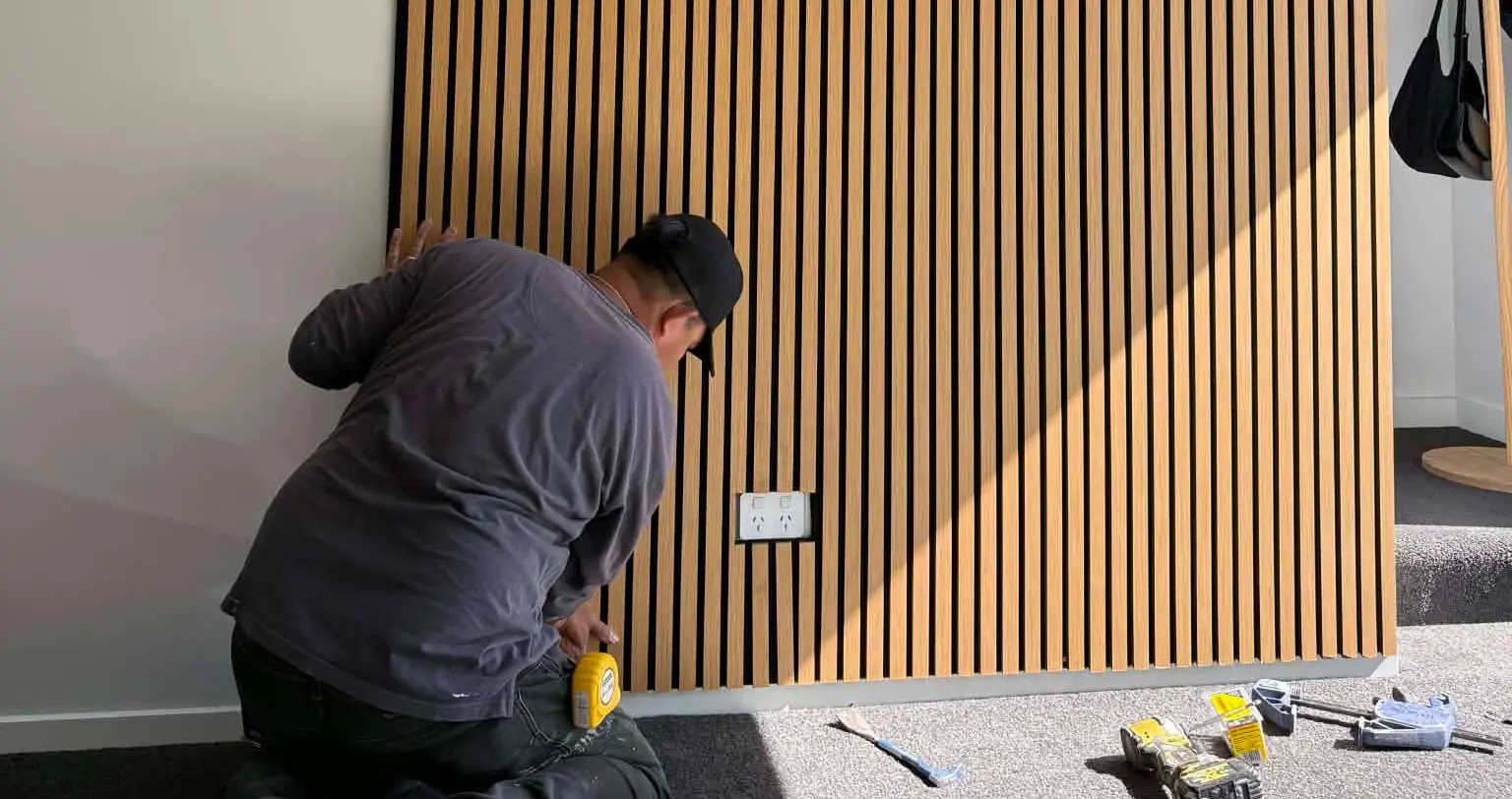
Wooden panels
MDF panels
Laminated panels
Acoustic panels
Metal panels
Stone or tile-look panels
Panel systems are commonly used in homes, offices, showrooms, hotels, hospitals, retail spaces, and commercial buildings. They are especially useful when a project needs fast finishing, design consistency, and a clean modern look.
What Is Traditional Wall Finishing?
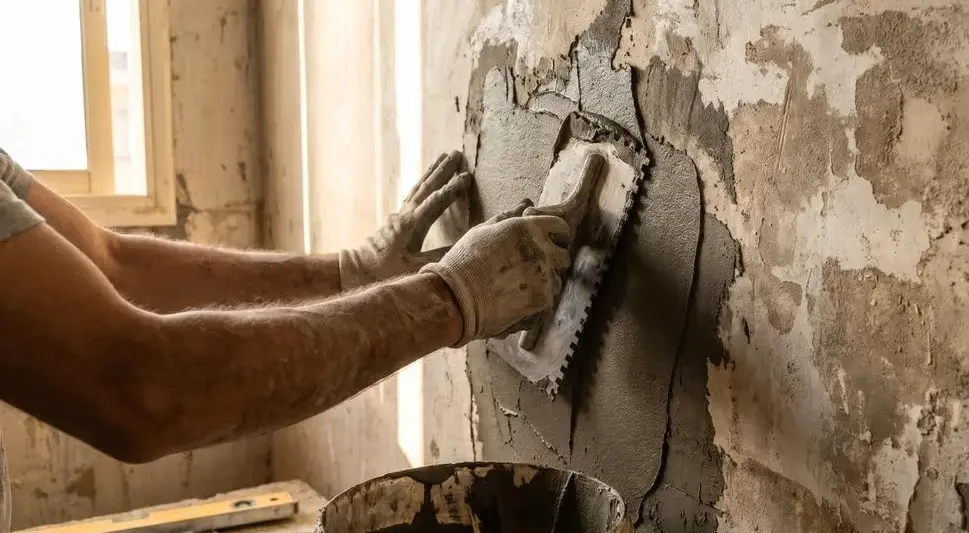
Traditional wall finishing usually involves multiple layers of work on the wall surface. This may include plaster, wall putty, sanding, primer, and paint.
A common traditional wall finishing process looks like this:
Wall plastering
Surface drying and curing
Wall putty application
Sanding
Primer application
Paint application
This method gives a smooth painted wall finish and has been used for years in residential and commercial construction. Traditional finishing is still one of the most common choices because it is flexible, familiar, and suitable for different types of walls.
Detailed Comparison: Key Factors
1. Installation Speed
One of the biggest advantages of panel systems is speed. Panels can be installed faster compared to traditional wall finishing because many of them come ready for fixing.
In traditional finishing, each layer needs time. Plaster needs curing and drying. Putty needs drying and sanding. Primer and paint also need drying time between coats. This can make the process longer, especially in large projects.
Panel systems are better when:
The project deadline is tight
The space needs quick renovation
Work has to be completed with less dust and mess
Commercial operations cannot be stopped for long
Traditional finishing is better when: Speed is not the main concern and the project allows enough time for proper surface preparation.
2. Final Look and Design Appeal
Panel Systems: Can instantly create a premium and modern look. They are available in many designs, textures, colors, patterns, and finishes (wood, marble, stone, metal, fabric, or fluted surfaces) without complex on-site work. Ideal for feature walls, reception areas, retail interiors, hotel rooms, conference rooms, and luxury homes.
Traditional Wall Finishing: Gives a clean, timeless, and simple painted look. It is ideal when you want smooth walls, soft colors, and a minimal finish.
Summary: Panel systems are better for design-heavy spaces; traditional finishing is better for clean, timeless, and simple wall finishes.
3. Surface Preparation Requirement
Traditional Wall Finishing: Needs proper surface preparation. If the wall has cracks, dampness, uneven plaster, dust, or weak areas, the final paint finish can suffer. Even small imperfections can become visible after painting.
Panel Systems: Can hide minor unevenness and surface defects because they are installed over the wall. This makes them helpful in renovation projects where the existing wall surface is not perfect.
Note: Panels should not be used to hide serious dampness, leakage, or structural cracks. Those problems must be treated before installation.
4. Durability
Durability depends on the type of panel and the quality of traditional finishing.
Good quality panel systems can last long when installed correctly. Some panels are resistant to scratches, stains, impact, and moisture.
Traditional wall finishing can also be durable if the surface is prepared properly, but painted walls can get stains, scratches, and marks more easily in high-contact areas.
Panel systems are often better for: Corridors, offices, retail stores, hotel lobbies, kids' rooms, high-traffic spaces, and commercial interiors.
Traditional finishing is better for: Areas where the wall does not face too much physical contact.
5. Maintenance
Traditional Painted Walls: May need cleaning, touch-ups, or repainting over time. If there are stains, scuff marks, or peeling issues, the wall may need repair before repainting.
Panel Systems: Often easier to clean—many panels can simply be wiped with a cloth and do not require frequent repainting. However, if a panel is damaged, it may need replacement instead of a simple touch-up.
Summary: Traditional finishing is easier to repaint; panel systems are easier to clean and maintain in daily use.
6. Cost Comparison
At first, traditional wall finishing may seem more budget-friendly as cement plaster, putty, primer, and paint are commonly available and familiar to workers.
Panel systems can have a higher initial material cost.
However, total cost should consider: labor cost, installation time, surface preparation, dust/cleaning, maintenance, repair frequency, design value, and project downtime.
For large commercial projects, panels may save time and reduce disruption. For simple homes, traditional finishing may be more economical.
7. Moisture Resistance
Traditional Wall Finishing: Can fail if the wall has dampness or seepage (paint peeling, putty powdering, stains).
Panel Systems: Some panels offer better moisture resistance (PVC, WPC, cement board).
Important: Panels do not solve leakage. If water is coming from behind the wall, both panels and paint will fail. Proper waterproofing treatment must be done first.
8. Flexibility in Design Changes
Traditional Finishing: Easier to change. If you want a new color or texture, you can simply repaint or re-texture the wall.
Panel Systems: More fixed in design. Changing them requires removing and replacing panels.
Summary: Panel systems are better for a long-term design statement; traditional finishing is better for easy design changes later.
9. Space Usage
Panel Systems: May slightly reduce room space because they are installed over the wall or on a frame (usually small, but matters in compact rooms).
Traditional Finishing: Applied directly on the wall and does not take up extra space beyond plaster and putty layers.
10. Sound and Thermal Benefits
Acoustic panels can reduce echo and improve sound quality. Certain board systems also improve thermal insulation when used with the right backing.
Useful for: Offices, meeting rooms, recording rooms, auditoriums, hotels, home theatres, and classrooms.
Traditional painted walls usually do not provide these functional benefits unless additional materials are used.
11. Workmanship Dependency
Traditional Wall Finishing: Heavily depends on workmanship during plastering, putty application, sanding, and painting.
Panel Systems: Reduces surface finishing errors because panels are pre-manufactured, but still requires skilled installation to avoid gaps, uneven joints, and misalignment.
12. Repair and Replacement
Traditional Finishing: Easier for local repairs (cracks, dents, stains can be patched, primed, and repainted).
Panel Systems: Damaged panels usually require replacement, and finding the exact matching design later can sometimes be challenging.
13. Best Use Areas for Panel Systems
Office interiors
Retail stores
Hotel rooms & reception areas
Feature walls & showrooms
Cafes and restaurants
Hospitals and clinics
Corridors & conference rooms
Home theatres & premium residential interiors
Fast-track renovation projects
14. Best Use Areas for Traditional Wall Finishing
Bedrooms
Living rooms & dining areas
Ceilings
Standard internal walls
Rental homes & budget projects
Large wall areas
Spaces where repainting may be needed later
Panel Systems vs Traditional Wall Finishing: Quick Comparison Table
Factor | Panel Systems | Traditional Wall Finishing |
Installation speed | Faster | Slower |
Design appeal | More decorative and modern | Clean and simple |
Surface preparation | Can hide minor unevenness | Needs proper surface preparation |
Maintenance | Easy to clean in many cases | May need touch-ups or repainting |
Cost | Higher initial cost in many cases | Usually more economical |
Durability | Stronger in high-contact areas | Durable if surface prep is good |
Moisture performance | Better with moisture-resistant panels | Needs proper waterproofing & paint system |
Design flexibility | Harder to change later | Easy to repaint |
Repair | Panel replacement may be needed | Easier patch repair |
Best use | Modern commercial & feature spaces | Standard walls & general interiors |
Which Works Better for Modern Spaces?
Panel systems work better when the goal is fast installation, premium design, low daily maintenance, and better surface protection.
Traditional wall finishing works better when the goal is budget control, simple design, easy repainting, and smooth painted walls.
Smart Approach: For most projects, the best solution is a combination of both—use panel systems for high-impact feature areas (reception, feature walls, corridors) and traditional finishing for standard walls and bedrooms.
Common Mistakes to Avoid
Installing panels over active damp walls
Ignoring cracks and leakage before finishing
Using low-quality adhesive or fixing systems
Choosing interior-grade panels for moisture-prone areas
Painting walls without proper primer
Applying putty on weak or dusty surfaces
Skipping proper surface preparation
Using the wrong product for the wall condition
Hiring untrained applicators
Choosing only based on initial cost and not long-term use
Final Thoughts
Panel systems and traditional wall finishing both have their place in modern construction and interiors.
Panel systems offer speed, style, durability, and a premium look. Traditional wall finishing offers simplicity, flexibility, and cost efficiency.
The best wall finish is not the one that looks good only on day one. It is the one that suits the space, handles daily use, and stays beautiful for years.