

What Are Emulsion Additives?
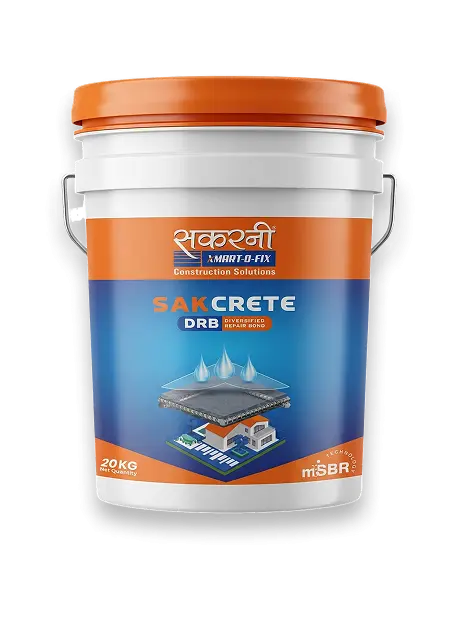
Emulsion additives are concentrated polymer-based liquid formulations (primarily synthetic acrylic or styrene-butadiene rubber / SBR latex) designed to be blended with water and cement/sand mixes.
When added to mortar, slurry, or coatings, these polymers form an internal elastomeric matrix that bridges microscopic pores, significantly improving bond strength, flexibility, and impermeability.
7 Common Wall Problems Prevented by Emulsion Additives
1. Paint Peeling, Flaking & Delamination
The Problem: Moisture or poor surface bonding causes the paint or putty coat to lose grip, leading to unsightly peeling and flaking sheets.
How Additives Help: When blended into the bonding slurry or base coat, emulsion additives drastically enhance interfacial adhesion between old masonry and new plaster/putty layers, preventing topcoat delamination.
2. Hairline & Shrinkage Cracks
The Problem: During the curing phase, cement mortar loses water rapidly, resulting in drying shrinkage, thermal stress, and network-like hairline cracks across the wall.
How Additives Help: Emulsion polymers improve the flexural and tensile strength of the plaster mortar, imparting elasticity that absorbs micro-movements and prevents surface shrinkage cracking.
3. Dampness, Moisture Seepage & Capillary Absorption
The Problem: Standard cement plaster contains interconnected microscopic capillary pores through which external rainwater and groundwater penetrate the wall structure.
How Additives Help: Polymer molecules cross-link within the mortar matrix, sealing capillary pores and drastically reducing water permeability, acting as an integral water-resistant barrier.
4. Efflorescence (Shora / White Salt Patches)
The Problem: Water traveling through the brickwork dissolves internal salts and brings them to the plaster surface, forming chalky white deposits that ruin the paint finish.
How Additives Help: By blocking capillary channels and reducing water movement through the wall, emulsion additives prevent salt crystallization from reaching the surface.
5. Hollow Plaster & Poor Bonding
The Problem: Applying new plaster or repair patches onto old, dense concrete surfaces (RCC columns, beams) often leads to hollow debonding due to weak mechanical interlock.
How Additives Help: Emulsion additives formulate high-performance bonding slurries that create a chemical "bridge" between smooth concrete and fresh mortar, eliminating hollow spots.
6. Chalking, Dusting & Surface Abrasion
The Problem: Weak surface mortar or plaster sheds loose sand powder and dust over time when touched, causing primer and paint failure.
How Additives Help: The polymer binding agent locks sand and cement grains firmly together, providing high surface hardness, abrasion resistance, and a dust-free substrate.
7. Patch Repair Failure (Cold Joints)
The Problem: Repairing electrical conduit grooves, plumbing cutouts, or chipped concrete with standard mortar often creates weak boundary joints that crack and separate within months.
How Additives Help: Modifying repair mortar with polymer additives ensures feather-edge adhesion and structural integration between the old substrate and the new patch.
Key Performance Comparison
Wall Issue | Standard Cement / Water Mix | Mix Modified with Emulsion Additive |
|---|---|---|
Bonding Strength | Low to moderate (mechanical grip only) | Superior (chemical + mechanical adhesion) |
Water Permeability | Porous (allows moisture ingress) | Highly impermeable (resists seepage) |
Shrinkage & Cracking | Prone to drying shrinkage cracks | High crack resistance & flexural elasticity |
Efflorescence Risk | High (capillary movement of salts) | Significantly reduced |
Durability in Repairs | High risk of joint separation | Seamless, durable bonding |
Where Should You Use Emulsion Additives?
External Plastering: Enhances weather and heavy rain resistance on exterior facades.
Waterproofing & Damp-Proof Courses (DPC): Used in bonding slurries and waterproof base coatings.
Concrete & Plaster Repairs: Ideal for column/beam patching, crack repairs, and conduit groove fillings.
RCC Structural Bonding: High-grip bonding slurry for smooth ceilings, beams, and columns before plaster application.
Wet Areas: Bathroom plaster, kitchen walls, parapets, and sunken slabs.
Best Practices for Using Emulsion Additives
Follow Dilution Guidelines: Dilute the additive with water strictly according to the recommended ratio (e.g., 1:2 to 1:4 with gauging water) depending on the application.
Pre-wet the Substrate: Dampen dry, porous masonry surfaces with clean water before application to prevent premature moisture loss.
Thorough Surface Cleaning: Ensure the substrate is clean and free from loose dust, oil, grease, and old paint flakes.
Do Not Re-temper: Use modified mortars within their active pot life; never add excess water to revive hardening mixes.
Final Thoughts
Standard cement and water mixes have natural limitations in tensile strength and moisture resistance.
Incorporating high-quality emulsion additives provides internal elasticity, superior chemical bonding, and water-tight integrity—ensuring your walls remain crack-free, damp-resistant, and aesthetically flawless for years.