
What Are Large Format Tiles (LFT)?
Tiles that have at least one side measuring 600 mm (2 feet) or larger—such as 800×1600 mm, 1200×1800 mm, and 1200×2400 mm slabs—fall under the large format category.
These tiles are predominantly vitrified or porcelain, engineered with an extremely dense, glass-like body that exhibits near-zero water absorption (less than 0.5%).
Why Traditional Cement-Sand Mortar Fails for Large Format Tiles
Lack of Porosity (No Mechanical Grip): Traditional mortar depends on water absorption to create a mechanical grip into the tile body. Vitrified slabs do not absorb water, causing mortar to slip and debond over time.
Hollow Cavities & Voids: Thick cement mortar is uneven and shrinks during drying, creating hollow pockets underneath. Stepping or dropping objects on these hollow spots causes immediate tile cracking.
Tile Slippage (Sagging): Due to the heavy self-weight of large slabs, wet cement slurry cannot hold vertical wall tiles in place, leading to sagging and uneven joints.
Shrinkage & Thermal Stress: Large tiles expand and contract with temperature shifts. Rigid cement mortar cannot absorb this movement, causing tiles to pop up (buckle) or crack.
Key Benefits of Using Polymer-Modified Tile Adhesive
1. Superior Chemical & Tensile Adhesion
Tile adhesives are enriched with special polymers and synthetic resins (such as Type 2, Type 3, or Type 4 adhesives conforming to IS 15477 / EN 12004 standards). They form a chemical bond that locks securely onto non-porous vitrified and porcelain surfaces.
2. High Flexibility & Thermal Shock Resistance
Large tiles undergo expansion and contraction across broad spans. Polymer-modified adhesives provide elastic flexibility to absorb structural vibrations, substrate deflection, and temperature fluctuations without debonding.
3. Non-Sag / High Thixotropic Properties
Special rheology modifiers prevent heavy tiles from sliding down vertical walls during installation, ensuring precise alignment and consistent joint widths.
4. 100% Bedding Coverage (No Hollow Spots)
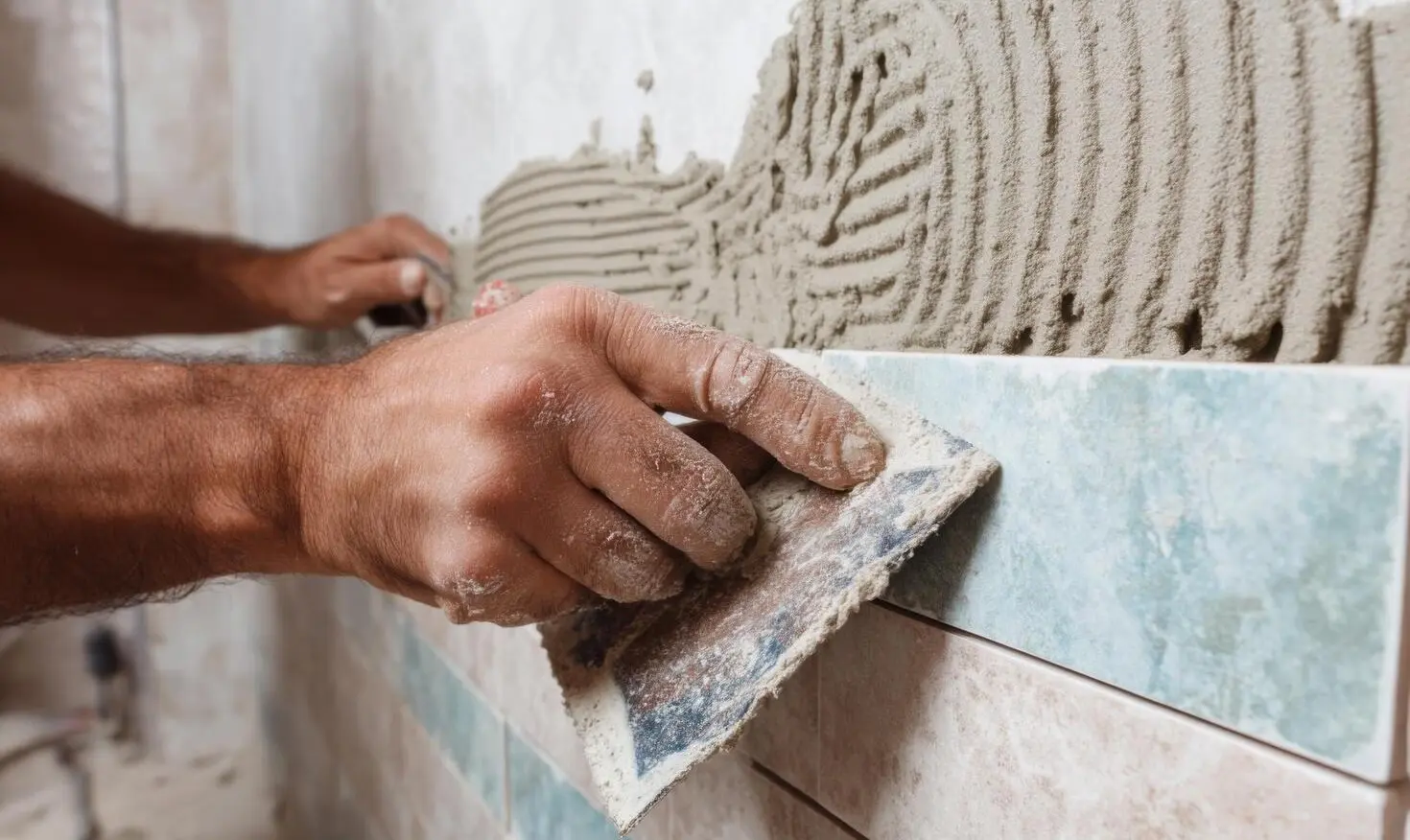
Applied using a notched trowel and back-buttering technique, tile adhesive creates a uniform, flat bedding layer (thin-set or medium-bed method). This eliminates voids and prevents hollow sounds or impact breakage.
5. Extended Open Time & Adjustability
Large slabs take time to maneuver and align. Tile adhesives provide a workable open time (typically 20 to 30 minutes), allowing installers to adjust and level tiles accurately before setting.
6. Thinner Application & Dead Weight Reduction
Unlike traditional mortar beds that require 20–40 mm thickness, tile adhesives achieve maximum strength in just a 3 to 6 mm thin-set layer, reducing material consumption and structural dead load.
Quick Comparison: Tile Adhesive vs. Traditional Cement Mortar
Parameter | Polymer-Modified Tile Adhesive | Traditional Cement-Sand Mortar |
|---|---|---|
Bonding Mechanism | Chemical adhesion + Mechanical grip | Mechanical interlocking only |
Suitability for Vitrified/LFT | Ideal (Engineered for non-porous slabs) | Unsafe (High risk of debonding) |
Flexibility / Stress Absorption | High (handles thermal movement) | Rigid (cracks under movement) |
Bed Thickness | Thin-set (3 mm – 6 mm) | Thick-bed (20 mm – 40 mm) |
Vertical Sag Resistance | High (anti-slip properties) | Poor (heavy slabs slide down) |
Hollow Sounds / Breakage Risk | Negligible (100% full coverage) | High (drying shrinkage creates voids) |
Water Curing Required | Zero water curing needed | 7–10 days of curing required |
Best Practices for Installing Large Format Tiles
Surface Preparation: Ensure the substrate (plaster, screed, or concrete) is completely cured, flat, clean, and free of dust, grease, or paint residues.
Double Buttering Technique (Mandatory): Apply the adhesive to the substrate using a notched trowel, and also spread a thin flat coat of adhesive directly onto the back of the tile (back-buttering) to ensure 100% solid contact.
Use Tile Leveling Systems (Spacers & Clips): Utilize specialized tile leveling clips and wedges to eliminate lippage (uneven tile edges) across expansive surfaces.
Vibrate / Trowel Out Air: Use a vibrating suction pad or rubber mallet to expel trapped air pockets from beneath the slab.
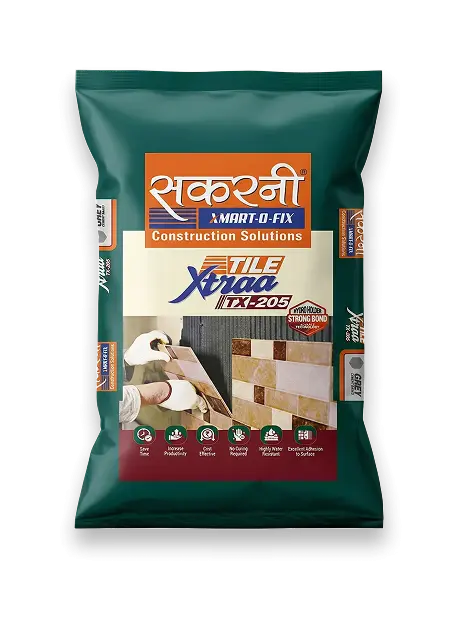
Select the Correct Adhesive Grade: Ensure the adhesive matches the tile size and substrate (e.g., Sakarni Type 2 / Type 3 or high-polymer grade for exterior/wall applications).
Final Thoughts
Investing in premium large format tiles without using the right tile adhesive puts the entire project at risk of hollow tiles, debonding, and costly repairs.
A high-performance, polymer-modified tile adhesive guarantees structural safety, zero lippage, and a flawless, long-lasting finish for modern spaces.